Every now and then my friend, Pat, sends me an e-mail that simply says, “How is your soul?” For seven years or so now, she is the only person who asks me that question. One of the reasons that question is central to our friendship is that we met when we were the only two who signed up for a covenant discipleship group at a particular time and Pat insisted that Wesley’s historical question for the class meetings be a part of our meetings.
John Ortberg discussed the question when he spoke to us yesterday morning. He said that at some point in his life someone had convinced him that the question “How is your soul?” was actually code for “How often are you having your private devotional time?” Of course, that is actually a very different question! You can religiously make time for morning prayer and scripture reading and have a very sick or impoverished soul. That is why Covenant Discipleship groups not only hold one another accountable for private devotion but also for corporate worship, acts of mercy and compassion, and acts of justice.
However, the question is much more comprehensive than checking off a list of activities that we have participated in. For years, I have answered it based on my emotions on a particular day—How close or far do I feel from God today? But Ortberg gave me a better way of answering the question.
Ortberg suggested that we look within and ask ourselves: Am I easily irritated? Am I discouraged? Am I stressed? Burned out? Fatiqued? Tempted? Do I need to hype what I’m doing or thinking? Does my life or ministry need a bit of spin?
All these are good indicators that things are not well with our soul, because when it is well with our soul we can: let go, bear burdens, resist temptation, relax, sleep, and hope.
So—how is your soul?
Friday, February 29, 2008

Friday, February 22, 2008
San Diego Bound

On Monday, I'm off to San Diego for the National Pastors Convention. I am excited about the prospect of hearing from so many of the people whose books have inspired me! I suspect I'll see very little of San Diego since almost every hour is filled with opportunities to hear great speakers. Plus I look forward to a few hours by myself in my hotel room. It should be really nice!
Speaking of books, (and speakers at the NPC), I've started reading Scott McKnight's "A Community Called Atonement" as part of my morning devotional and I highly recommend it. He does use those expensive theological words but he defines them and shows why they make a difference in your daily life. If you are looking for a book that is highly readible and might just challenge the way you think about the effect of Jesus' death on the cross, get a copy and start reading.
Speaking of books, (and speakers at the NPC), I've started reading Scott McKnight's "A Community Called Atonement" as part of my morning devotional and I highly recommend it. He does use those expensive theological words but he defines them and shows why they make a difference in your daily life. If you are looking for a book that is highly readible and might just challenge the way you think about the effect of Jesus' death on the cross, get a copy and start reading.
Saturday, February 16, 2008
The Last Shall be First, the First Last, but the Middle is Still the Middle

But many who are first will be last, and the last will be first. Matthew 19:30
During Advent one year when the kids were much smaller, we were reading this scripture. And our middle child, Phillip, said, "The first will be last and the last will be first, but the middle is still the middle!" As if to say, I guess there is no justice for middle children even in the Kingdom of God!
Someone has already pointed out that I have posted updates on Laura (last) and Steven (first) and skipped over my poor middle son. The problem with being 17 and being a junior is that he is between major milestones in his life right now! We are looking forward to his first prom and next month he will experience something none of the rest of us have as he travels to Spain and Italy for spring break with the Buckhorn Choir!
He is a truly great kid! And I am very proud of him!
Friday, February 15, 2008
We interrupt this blog to be totally obnoxious!

Okay--so I do brag about my children from time to time. I try not to be too obnoxious about it--but they are pretty special
;-D
But from time to time, I think all parents and grandparents alike have the bragging rights. So here I go --
Not that he called me, mind you, BUT according to Steven's facebook status, he has been accepted into the Education grad school at Auburn and is awaiting news from the College of Science and Mathematics (COSAM). AND he has been notified that he has been named one of COSAM's Dean's Medalists.
Tuesday, February 12, 2008
ch . . .ch . . .ch . . . changes (part ii)
 There are political changes--which theoretically--are somewhat under our control. But then there are those changes that simply just happen. Changes happen—good and bad—that change how we live our lives, how we interact, and even how we define ourselves.
And maybe I'm being overly dramatic. But in a short 24 hour period, I bought Laura her first prom dress; she got her driver's license and drove off by herself for the very first time; and Steven's college graduation announcements arrived in the mail.
It is exciting watching these really neat kids grow up. The changes are at once joyful but also bittersweet as I realize that very soon they'll be on their own. (Actually, for all intents and purposes Steven already is!) And with each of these changes, I realize the truth that our children are only given to us for a short time and then we have to give them back to God.
It is really a good thing that God is a better parent than me!
Monday, February 11, 2008
Lenten Reflections
Phyllis Tickle has a wonderful new blog reflecting on each day of Lent. Each day's reflection is short, but like all her writing, they are beautiful and will make you think.
(I'll get to hear Phyllis Tickle at the end of the month at the National Pastors Convention!)
(I'll get to hear Phyllis Tickle at the end of the month at the National Pastors Convention!)
Saturday, February 9, 2008
Ch . . ch . . ch . . .changes
Thanks to my sister for sharing this with me!
"I wonder who really is the change candidate? It can't be both of them [Clinton & Obama]. What would be a black man and a woman - how could that be different than the 43 other Presidents we've had?" (Jon Stewart -- Jan 8, 2008)
Auburn University Band Website
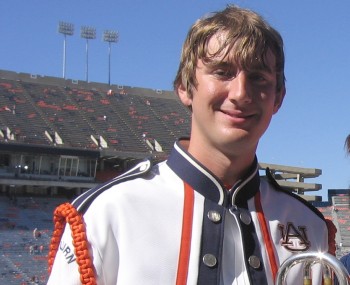
On Feb. 11th, the AU Band website will take on a new look and a new webmaster. Steven is taking on a new job for the AU Band and will become the webmaster for the AU Band. If you are a band geek like us, check it out. And be sure and check out his latest article for Mental Floss this weekend.
Friday, February 8, 2008
Fat Tuesday/Mardi Gras
 Got asked a great question--what is the connection between Mardi Gras and Ash Wednesday?
Well, it all goes back to the traditions that take the church calendar seriously. Beginning with Epiphany, when we remember Magi coming to pay homage to the baby Jesus, and ending with Ash Wednesday, some Christians observed a time of great celebration. Part of that celebration was the fun of eating King Cake. My friend, Sandy, who grew up in Louisiana said that growing up they ate King Cake every week between Epiphany and Mardi Gras but now you can usually only buy them for Fat Tuesday. The three days preceding Ash Wednesday were special carnival days where people let loose and prepared for 40 days of fasting and reflection. (Carnival by the way means "Farewell to the flesh") Thus it was "Fat" Tuesday because of all you ate. Mardi Gras is simply French for "Fat Tuesday." However, Fat Tuesday is also known as "Shrove Tuesday" (from the word "shrive" to hear confession) because it was a time to confess sins before the serious fasting of Lent and also as Pancake Tuesday because of the tradition of making pancakes to use up the eggs and flour before the Lenten Fast. You can learn more about Mardi Gras here and to learn more about Lent so this article.
What are you doing for Lent?

Here are these week's questions from RevGalBlogPals:
1. Did you celebrate Mardi Gras and/or Ash Wednesday this week? How?
I celebrated Mardi Gras by voting and attending a Church Council meeting. Not too exciting (although my candidate (No Jeff, not Huckabee) did win our primary!) And Ash Wednesday I observed by participating in our Ash Wednesday service. This year I was particularly moved as I imposed ashes on people because I knew many of their stories. I think it also helped that I had to think through how to explain what we were about to do to the confirmation class (Thanks Tony!) and watching those young people come forward to receive their ashes was also moving.
2. What was your most memorable Mardi Gras/Ash Wednesday/Lent?
Gee--I don't know that I have had a most memorable Mardi Gras/Ash Wednesday/Lent.
3. Did you/your church/your family celebrate Lent as a child? If not, when and how did you discover it?
I didn't grow up participating in Lent. In fact, I remember one year when my sister announced she was giving up something for Lent and I said, "We're Methodist! Not Catholic!" I started observing Lent in my early adulthood. I had a job that required a lot of travel and I found myself traveling during Lent with an Episcopalian who observed Lent and I joined in with her.
4. Are you more in the give-up camp, or the take-on camp, or somewhere in between?
I'm in the in-between camp. I suspect the best way to observe Lent is to do both.
5. How do you plan to keep Lent this year?
This year I am observing Lent by adding evening prayer to my daily routine and at least a weekly act of social justice. My devotional practice is based on Covenant Discipleship groups which ask each week what acts of devotion, compassion, worship and justice I have done and the justice square is usually empty! The reason I'm not giving up a particular item this Lent is that I'm already on Weight Watchers so . . .
Anyone else want to share?
Friday, February 1, 2008
Mike Huckabee
As some of you may have heard, Presidential candidate Mike Huckabee is holding a rally in Huntsville tomorrow. The rally will be held in the New Room of Trinity. He is speaking at the invitation of the Republican Men's Club who rented the New Room for this purpose. However, Trinity UMC is not endorsing Mike Huckabee or any other candidate.
If you have any questions, please feel free to call.
If you have any questions, please feel free to call.
Picking and Choosing

Over at Jesus Creed, Scott McKnight posed an interesting question:
It is often said, fairly or not, that we all “pick and choose” when it comes to living out the Bible. In your opinion, what is the most obvious example of “picking and choosing”? (For instance, picking head coverings for women but not choosing the holy kiss!)
The one that comes quickest to mind to me is when people quote 1 Timothy 2:12 to me 'I permit no woman to teach of to have authority over a man" but ignore the earlier instruction in verse 9 "woman should dress themselves modestly and decently in suitable clothing, not with their hair braided, or with god, pearls or expensive clothes." While there are traditions that don't let women teach/preach which also ban braided hair and gold earrings, I can think of quite a few denominations that see nothing wrong with gold earrings but which don't let women teach.
What examples come to mind for you?
Teaching and Preaching Scripture
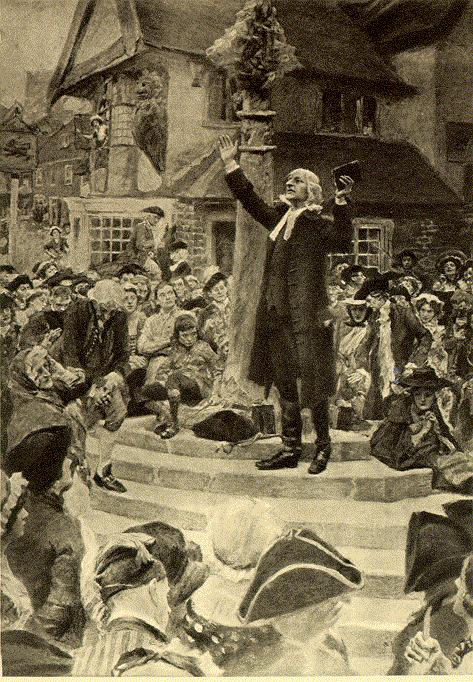
Every now and again, someone posts something in the comments of the C&C Blog that really challenges me and makes me think through what I believe about worship. Last week, we had an interesting discussion about the song "If We Are the Body" and whether it was guilt-inducing or challenging. This week, someone requested that we occasionally preach about the teachings of Jesus rather than preaching about what Jesus did or what others have said about Jesus.
What I've discovered is there is most "churched" folks speak about the Bible in code. It isn't coded to confuse us--rather it is a code they learned in the particular churches that formed them. For instance, when someone says they want more biblical preaching, they generally mean they want more preaching that tells them what to do and not do. In other words, they generally want a lot of preaching on issues related to personal holiness, such as sexual morality. When people say they want to hear more about Jesus' teaching, then they generally want to hear about loving your neighbor, caring for others and such. Sometimes this is meant as matter of social holiness (being nice to others) but often this is code for talking more about social holiness, such as war and poverty.
Strong biblical teaching and preaching should speak to both.
However, there are lots of places that we can find good strong teachings related to ethics. What is unique about Scripture is not its teachings on morality--as wonderful as those are--but in what it claims about Jesus and about the Kingdom we are called to be a part of. And this is something that is so counter-cultural to us that it is jarring.
The truth is that I have received more complaints when we actually do what Jesus says than at any other time. For instance after 9/11, I prayed for Bin Ladin ("But I say to you, Love your enemies and pray for those who persecute you."). Didn't go over well . . . I was told that it was fine and good to pray in general for enemies, but please whatever you do--don't name them and especially not that one!
A couple of weeks ago, the Bishop spoke to a laity event about the importance of Scripture in our tradition and his words are resonating on my heart as I think about what it means to be faithful to Scripture in teaching and preaching.
Though a few confused United Methodists may have been “literalists,” or “fundamentalists” in their reading of Scripture, we have never officially been so limited. We have too much respect for our dependence upon the Holy Spirit in our scriptural interpretation, and a healthy acknowledgement of the distance between Scripture’s originating context and our own situations, as well as a too vivid sense of the reality of a living, resurrected and revealing Lord. We have found that the Bible’s word is enlivened through scholarly study rather than muted and that the word the Bible speaks is always multivocal, thick, lively, relevant and rich. The Bible intends to be more for us than just a book of rules, a repository of helpful principles for better living. Attempts to use the Bible like that are bound to be frustrated by the nature of the Bible’s way with the truth. Scripture is an attempt to construct a new world, to stoke, fund and fuel our imaginations. The Bible is an ongoing debate about what is real and who is in charge and where we’re all headed. So the person who emerged from church one Sunday (after one of my most biblical sermons, too!), muttering, “That’s the trouble with you preachers. You just never speak to anything that relates to my world,” makes a good point.
To which the Bible replies, “How on earth did you get the idea that I want to speak to your world? I want to rock, remake, deconstruct and rework your world!”
Bishop William Willimon
So how popular do you think it would be to preach in a manner that rocks, remakes, deconstructs, and reworks your world?
Come to think of it . . . I think it got Jesus killed.
Subscribe to:
Posts (Atom)